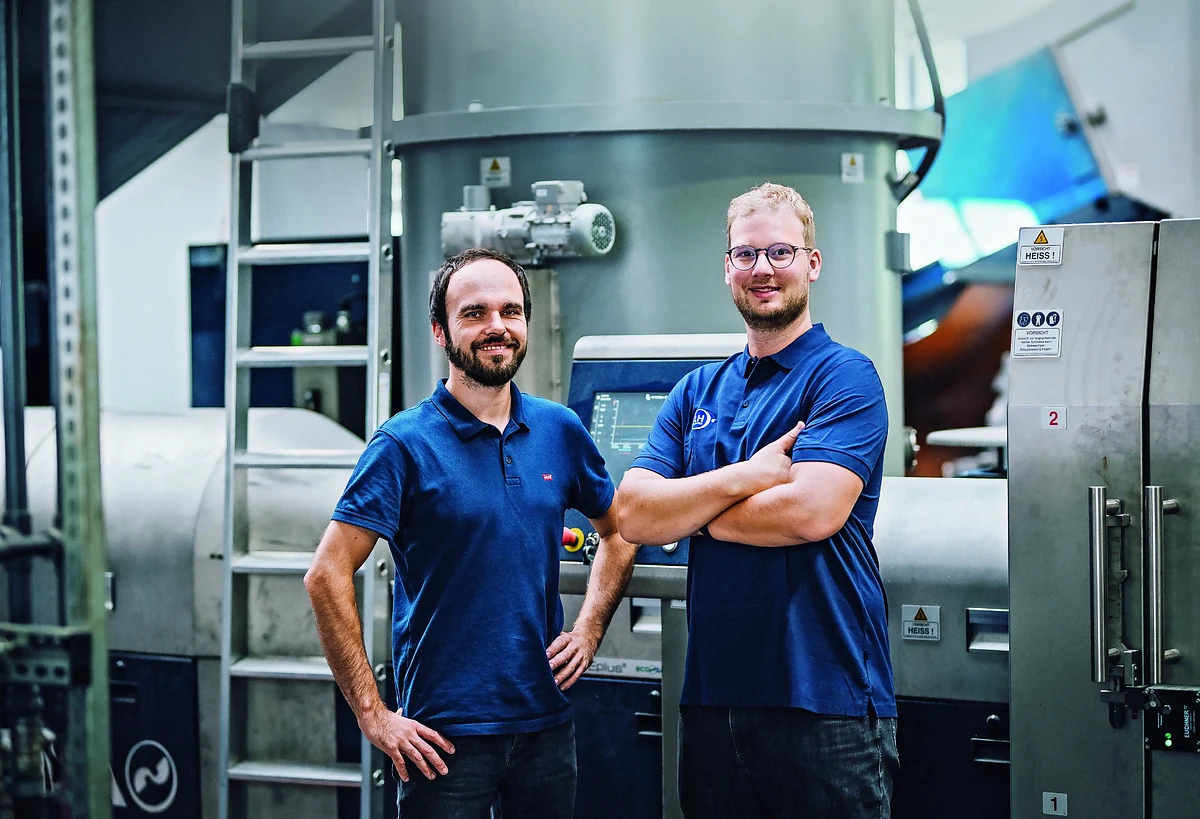
Until recently, it was unthinkable to produce a 15-µm film from recycled material. Now it’s official: yes, it is possible. Not only possible, but it’s already being done. And that’s using regranulates from LH-Plastics in Werdau, Saxony. The processor has specialised in processing PIR and PCR film waste made exclusively from PE, has purchased a new recycling line, is planning another, is RecyClass-certified and has been growing for years. Managing Director Robby Beckert and Managing Partner Heinz-Henning Seute explain what contributes to the company’s success, why employees remain loyal to the firm, why ten applications arrive every week, and what all this has to do with diamonds, at an on-site interview with K-PROFI.
This feature was published in: K-PROFI international issue 1 / 2026, https://www.k-aktuell.de/magazine/k-profi-international/
Text: Dipl.-Ing. (FH) Karin Regel, Editor K-PROFI
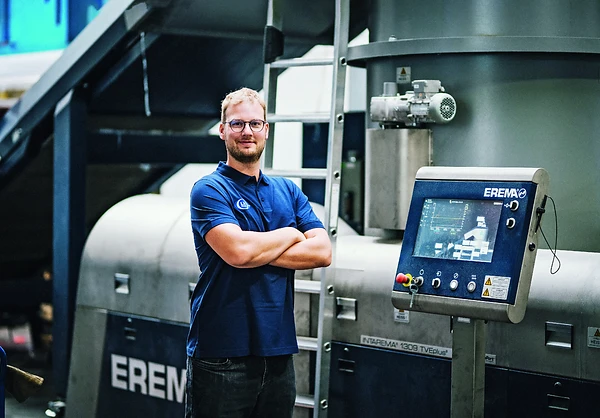
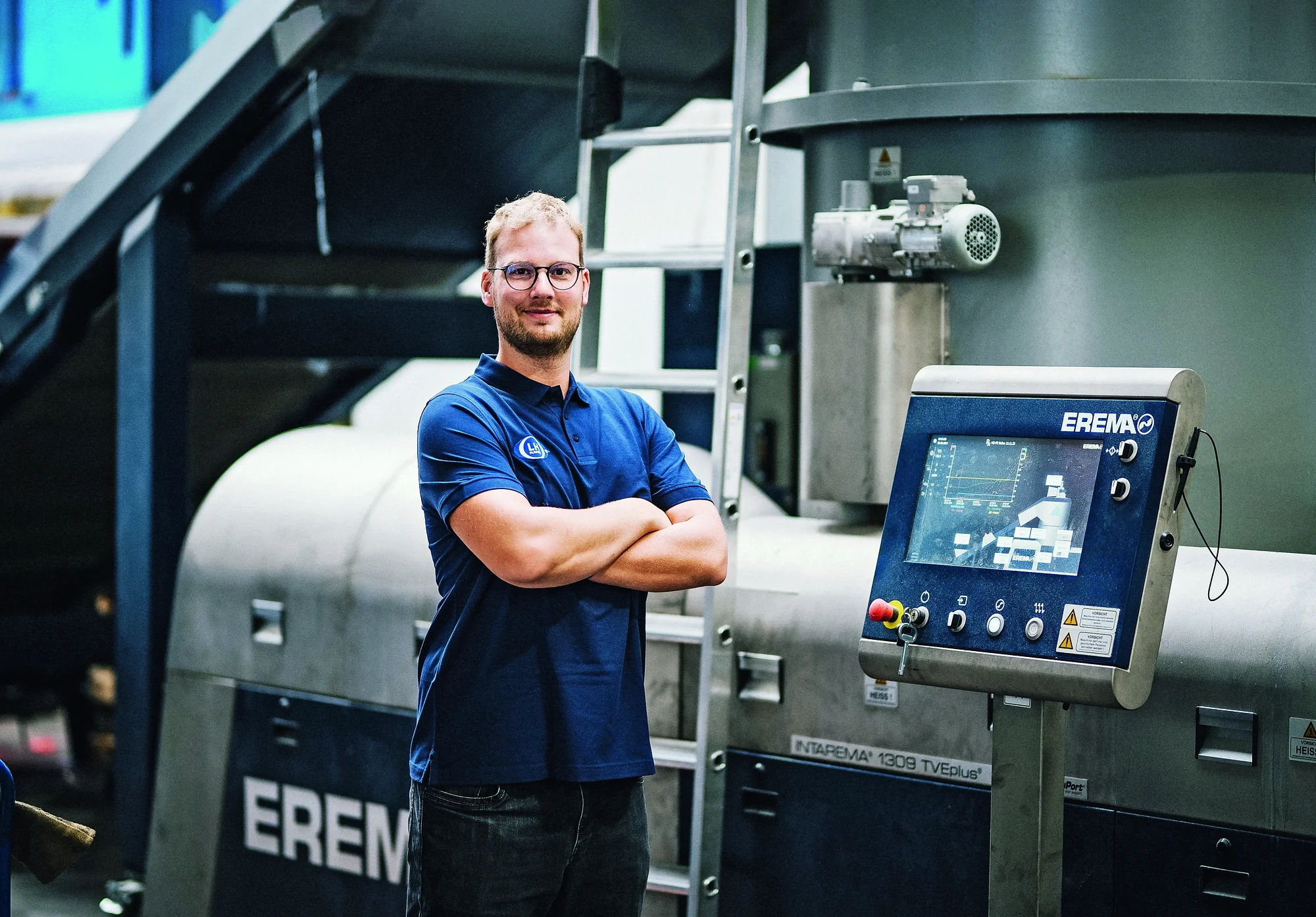
Part of the reason for the high quality of the recycled material from Werdau – which enables film manufacturers to produce films as thin as 15 µm – is the ReadyMac recycling line with a laser filter, installed in September, from the recycling machinery manufacturer EREMA in Ansfelden, Austria, which replaced an older system. “The laser filter ensures that our recyclates are clean and free of specks,” Heinz-Henning Seute is certain. The highlight of the system is that it is a standardised unit, available from stock, with a guaranteed output of 500 kg/h. Heinz-Henning Seute comments: “We ordered the system, it was delivered on Tuesday, installed on Thursday and went live on Friday.” He is very satisfied with the system’s performance, but above all with the quick and straightforward commissioning. Both managing directors are in fact so satisfied that they have already firmly planned the purchase of a second ReadyMac. This will be EREMA’s seventh system, which this time will be installed not as a replacement for an old system, but as an additional unit.
This means that four systems will be operational at LH-Plastics next year, further increasing the production capacity from the current 10,000 t/a. “We want to be well prepared,” says Robby Beckert, who is certain that with the legislative changes in the packaging market, which will come into force by 2030 at the latest, recycled material could become scarce. At present, virgin material is too cheap, he notes, with the result that some processors have been driven into insolvency. “Material flows must be secured now, both within and for Germany and Europe,” emphasises Heinz-Henning Seute as well. Although film scraps are no longer shipped to China, a great deal of high-quality waste is still sent abroad, a situation the pair view very critically: “We need reliable supply chains for recyclates in Europe, and we are doing our bit to achieve that!”
Material flows must be secured now, both within and for Germany and Europe. We need reliable supply chains for recyclates in Europe, and we are doing our bit to achieve that!
Heinz-Henning Seute, Managing Partner at LH Plastics
Increasing the PCR share
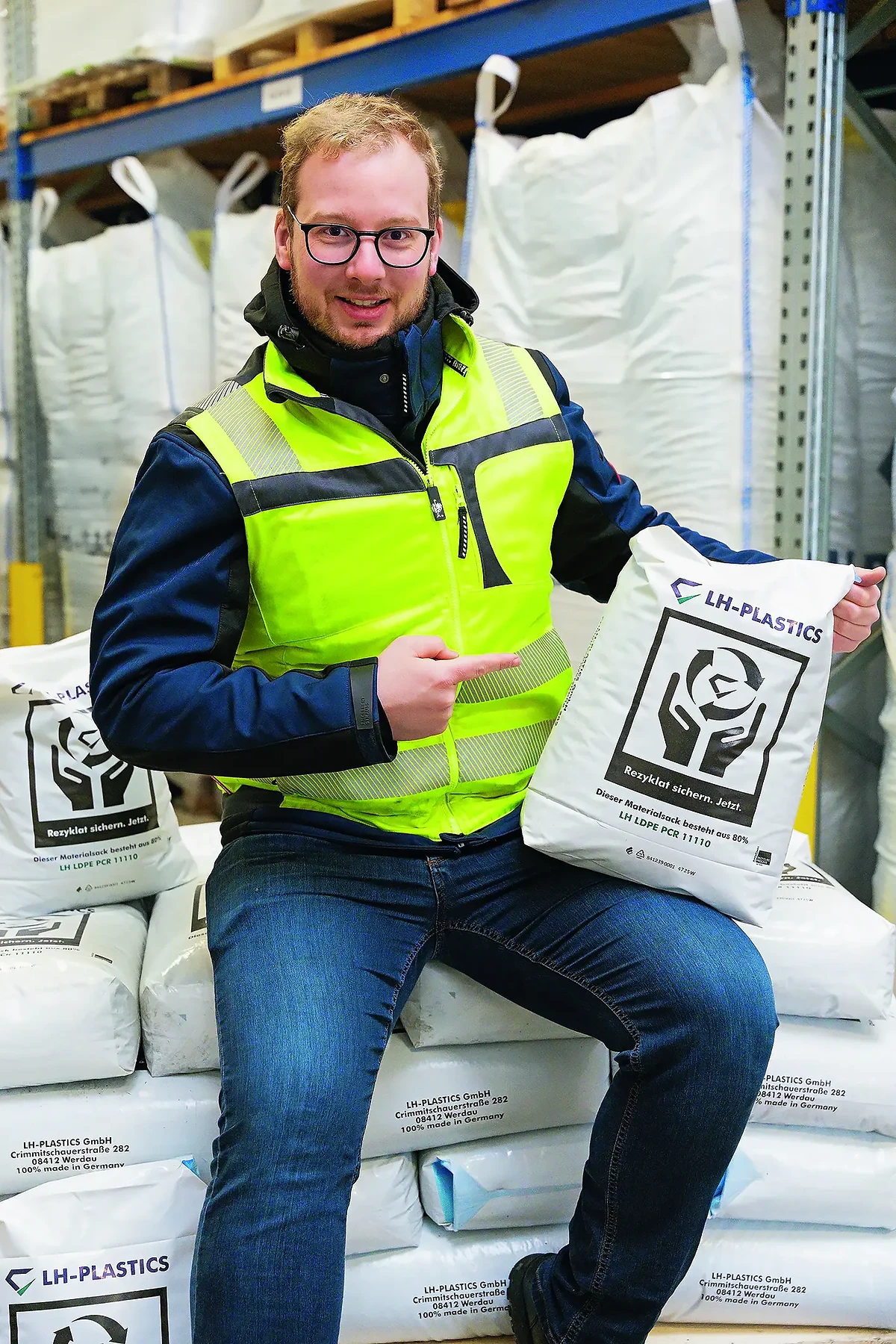
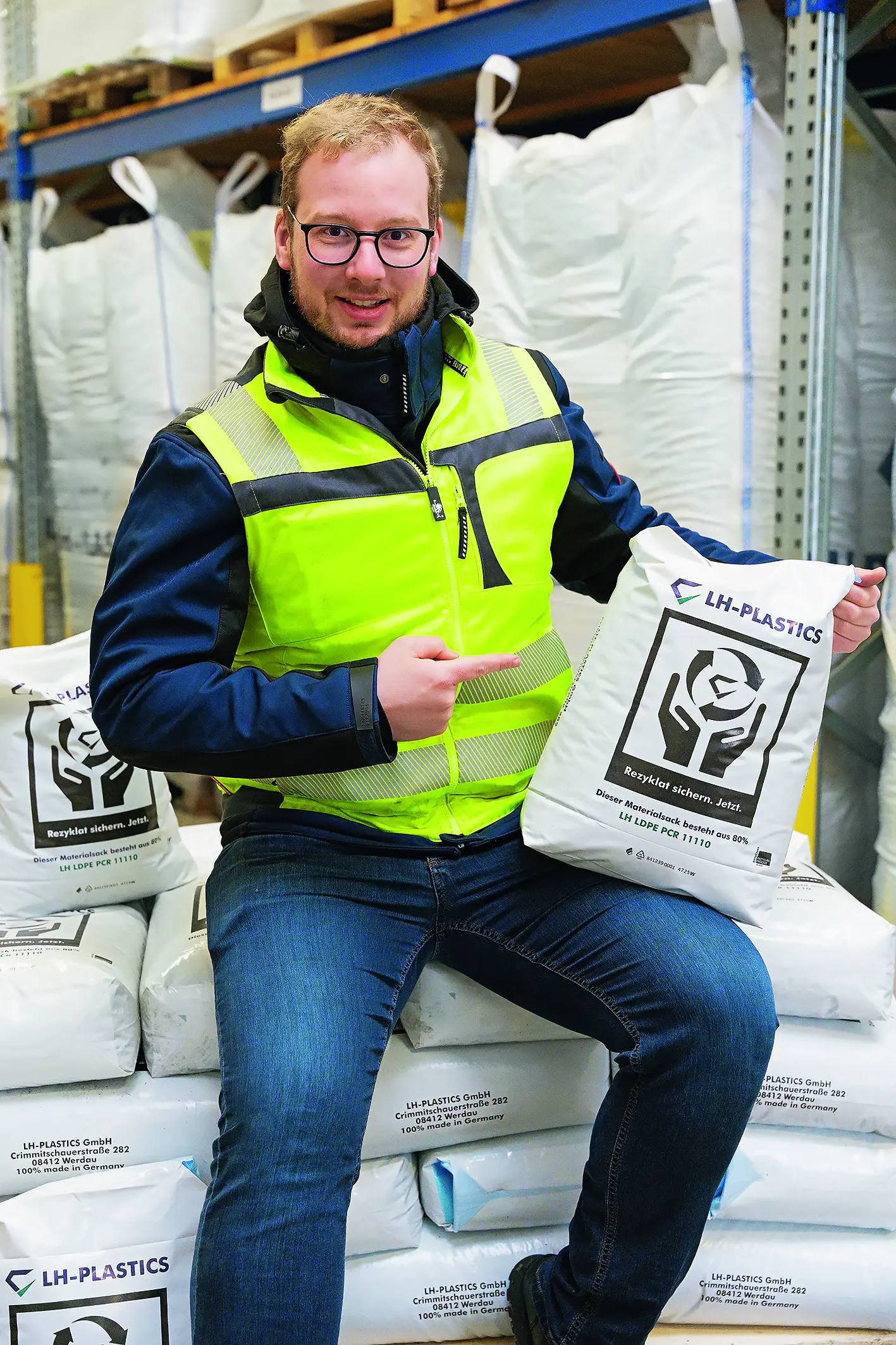
LH-Plastics specialises exclusively in PE film scraps, which the company sources from a fixed base of suppliers. “With our team of 30 employees, we are still too small to have our own sorting and washing plant, so we purchase mixed films that are either generated during the production of various film manufacturers or as post-consumer waste from wholesalers and DIY stores,” says Robby Beckert, describing the input stream, and adds: “We can easily process film scraps that have labels, provided they have been stored in a dry place.”
Currently, around 20 % PCR film and 80 % PIR film scraps are fed into one of the three extruders, although “over the next few years, the input stream is to be shifted to a ratio of approximately 1/3 PCR to 2/3 PIR”, says Robby Beckert, outlining the plans.
Laser filter as a key component
The increase in the amount of PCR that can be processed is made possible by the use of both the already installed ReadyMac with laser filter and the planned one. After all, unlike piston screen changers in the other two systems, the laser filter ensures a high-purity melt with up to 50 % lower melt losses. And this is achieved without manual intervention by the operator thanks to the high degree of automation.
The laser filter operates with very fine filter screens of up to 70 µm and captures the contaminated melt coming from the extruder between two laser-drilled (hence the name) screen discs arranged parallel to one another. After the melt has been pressed through the screen discs, it leaves the filter clean via the collection channel. Contamination particles remain stuck to the screen and are scraped off by three scrapers mounted on each side of the screen discs and transferred directly to the discharge system, so that the filter can operate undisturbed again and the melt can flow through unhindered.
As the melt does not pass through any rotating or moving parts in the clean zone, a short residence time is guaranteed, as is the elimination of cracking and the resulting black specks. Robby Beckert comments: “For us, the filter means a high degree of cost-effectiveness; for our customers, it means a particularly high-quality material based on PCR material, which can also be processed into thin and ultra-thin films.”
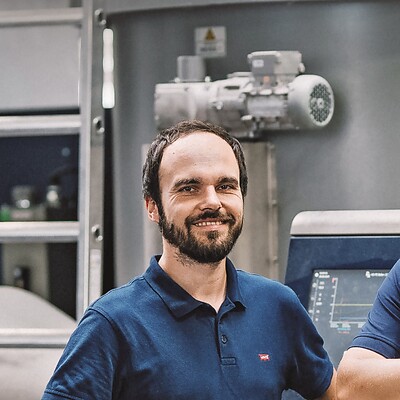
For us, the EREMA Laserfilter means a high degree of cost-effectiveness; for our customers, it means a particularly high-quality material based on PCR material, which can also be processed into thin and ultra-thin films.
Robby Beckert, Managing Director at LH-Plastics
Exclusively PE
On the three recycling lines, all of which are equipped with a shear compactor, an extruder and a hot-cut granulator, LH-Plastics produces PE regranulates with various MFI values, mechanical properties and colours from HDPE, LDPE and LLDPE input material in a three-shift operation. “To be able to offer ideal colours, the respective shift supervisor sorts the delivered film scraps and gives the plant operators precise instructions on how to mix them,” explains Robby Beckert, who praises the wealth of experience of his staff, of whom he can rely 100 per cent.
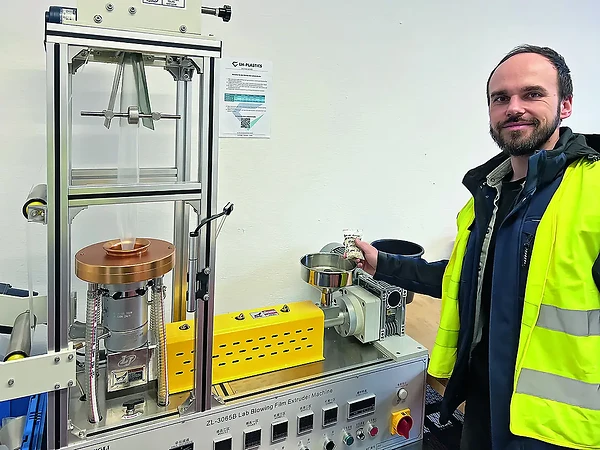
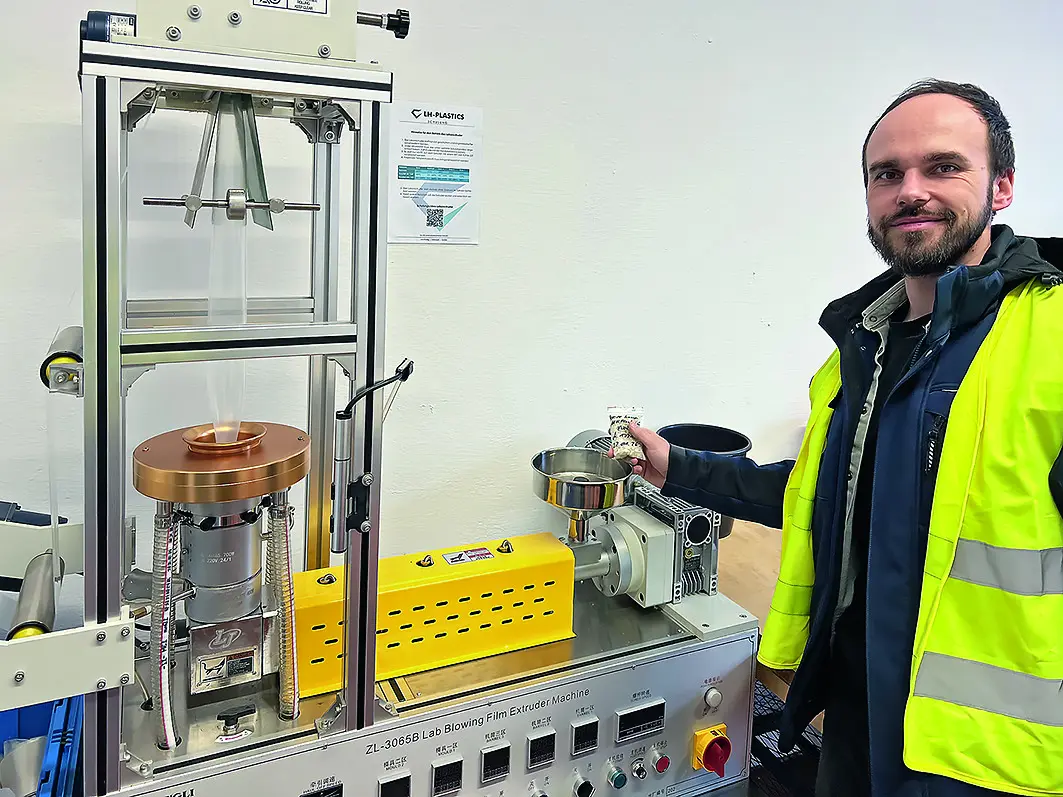
The result is granulates in transparent, light multicoloured, dark multicoloured and green, as well as in custom colours at the customer’s request. LH-Plastics operates a well-equipped laboratory not only to meet customer requirements but also for its own quality control and assurance, taking a sample from every BigBag and analysing it. The highlight of the laboratory is a mini blown film line, which Heinz-Henning Seute ordered online from a Chinese supplier and was a little surprised when it actually arrived five months later. It works excellently and is equipped with standard components available locally.
A shared endeavour
Just as modern and cool as the two young managing directors are in handling orders, for example, they are in their dealings with their staff and on social media. Robby Beckert comments: “I’ve been with the company for 18 years now and have known many of the current staff since day one.” “We involve our staff in many things, regularly organise joint events – such as a full-day Christmas party, for which the business is closed for the whole day without further ado – and pay more than minimum wage,” says Heinz-Henning Seute, outlining a few points that go down very well with his staff.
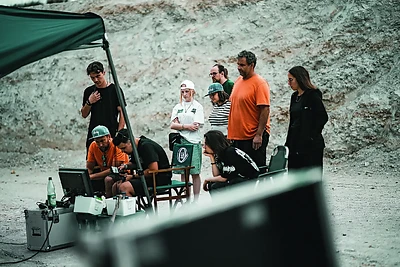
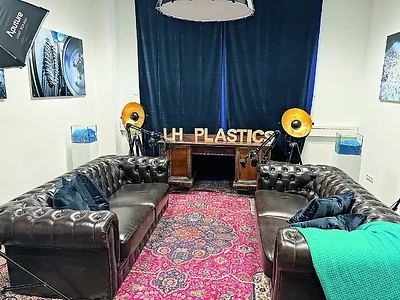
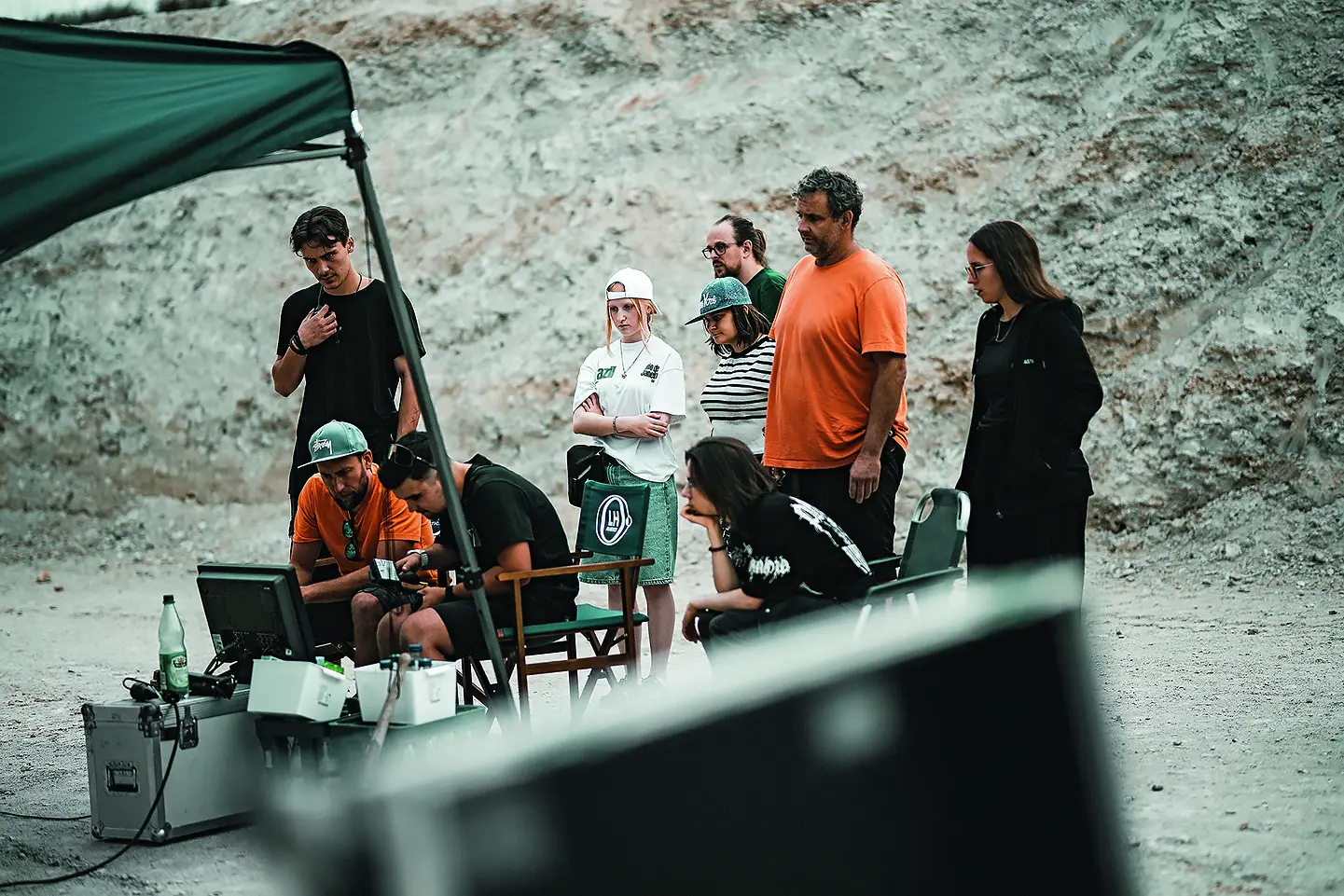
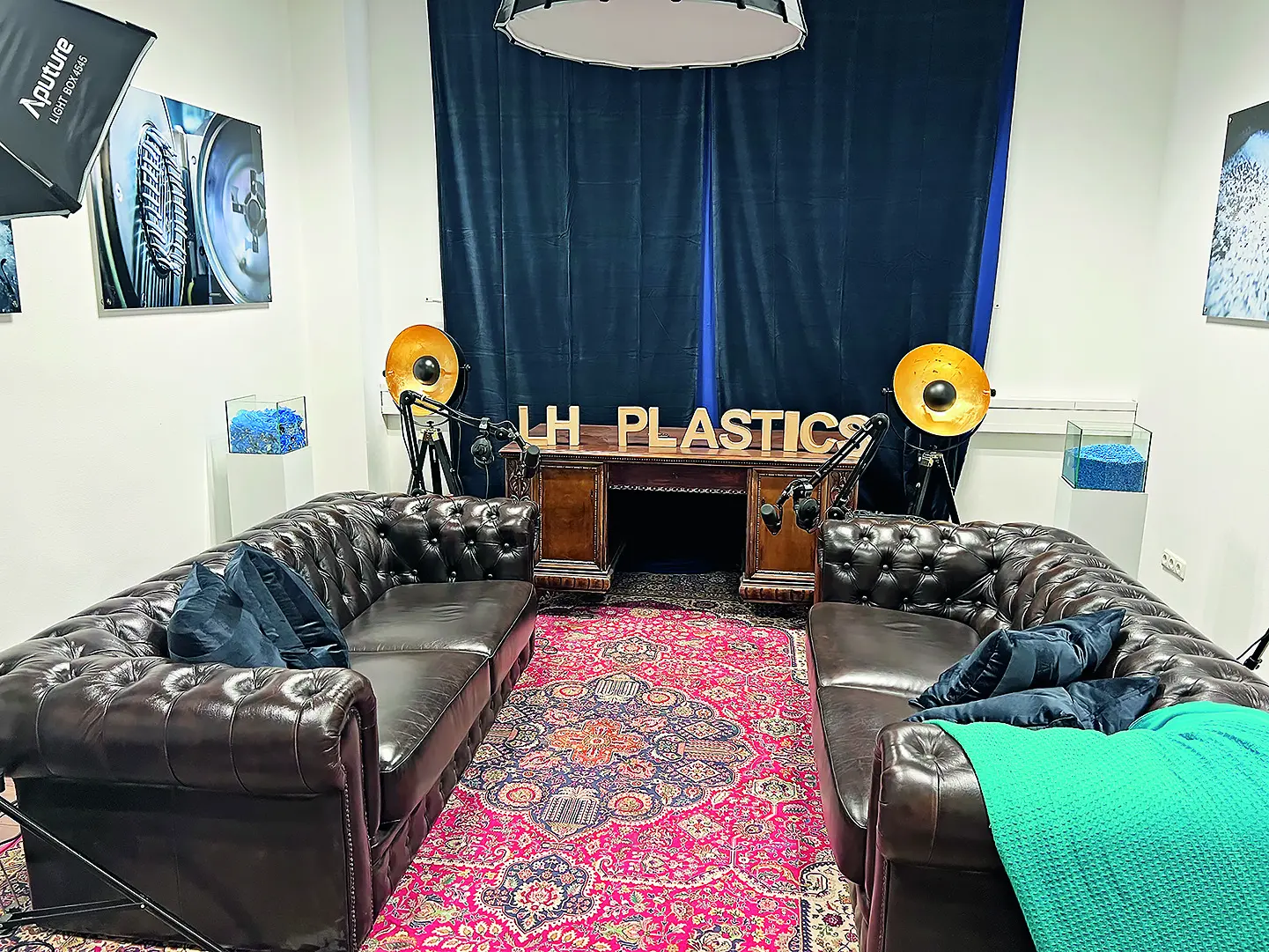
One shared activity that everyone enjoys is the films they shoot at the company, which can be found on the website as well as on YouTube. There are now three films: “Saxon Diamonds”, “House of Diamonds” and “Time of Diamonds”. The latest film explores the question of what remains after the apocalypse and concludes that plastics, much like diamonds, are durable and must be preserved. “We must keep plastics in the cycle and secure their material flows,” Heinz-Henning Seute emphasises, stating that this is very important to them both personally and as a company, and reiterates that “it’s high time” to act.
“Not only do we handle the collection of film scraps – which we can easily collect either in a container, with a articulated lorry or a walking floor – but we also manage the order processing. We produce for our customers on a just-in-time basis or for stock, and guarantee that even when collecting twelve lorries with a total of 240 BigBags, the quality of the first and the last is absolutely identical.”
Robby Beckert, Managing Director at LH-Plastics
Impressive flexibility
“It’s incredible how much attention we’re generating with our videos and posts on LinkedIn and Instagram,” says the managing director with delight. He sees this, among other things, in the roughly ten job applications that land on his desk every week – he’s never heard of a skills shortage. But he also notices it in the customer enquiries, to which he and his team can respond quickly and with great flexibility. “Not only do we handle the collection of film scraps – which we can easily collect either in a container, with a articulated lorry or a walking floor – but we also manage the order processing,” promises Robby Beckert. “We produce for our customers on a just-in-time basis or for stock, and guarantee that even when collecting twelve lorries with a total of 240 BigBags, the quality of the first and the last is absolutely identical.” Here, the managing directors certainly see their company’s particular strength: ensuring output quality even when input quality fluctuates.
“Customers can use our regranulates to produce any type of film except those for the food or medical sectors, as this is not yet permitted,” says Heinz-Henning Seute, describing the potential applications. Common areas of use include bin liners, bubble wrap, mailing bags and tarpaulins for the textile industry.