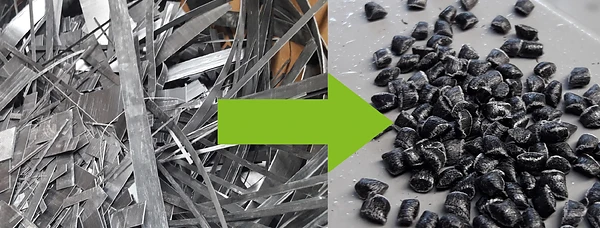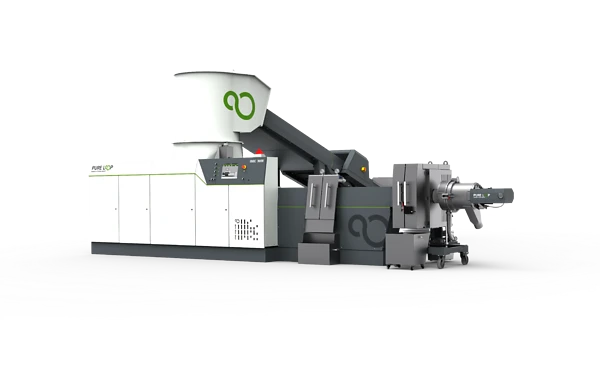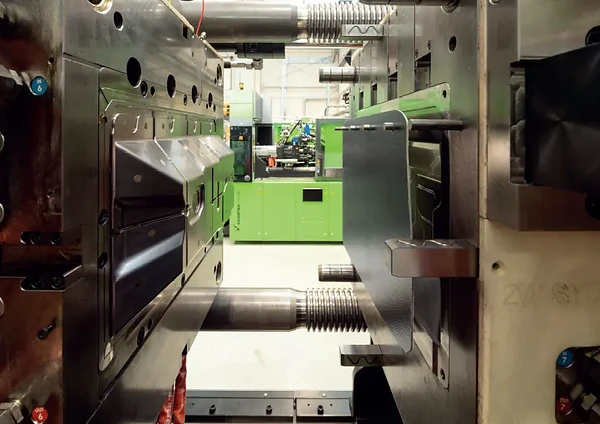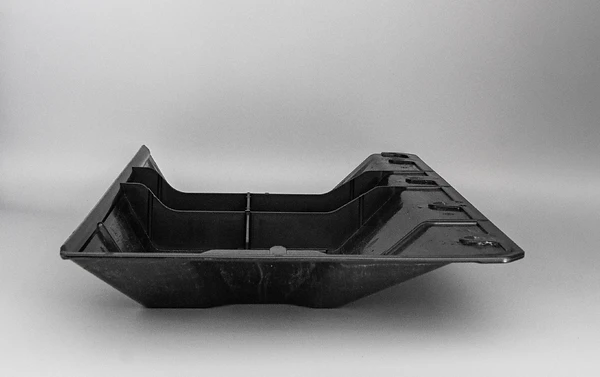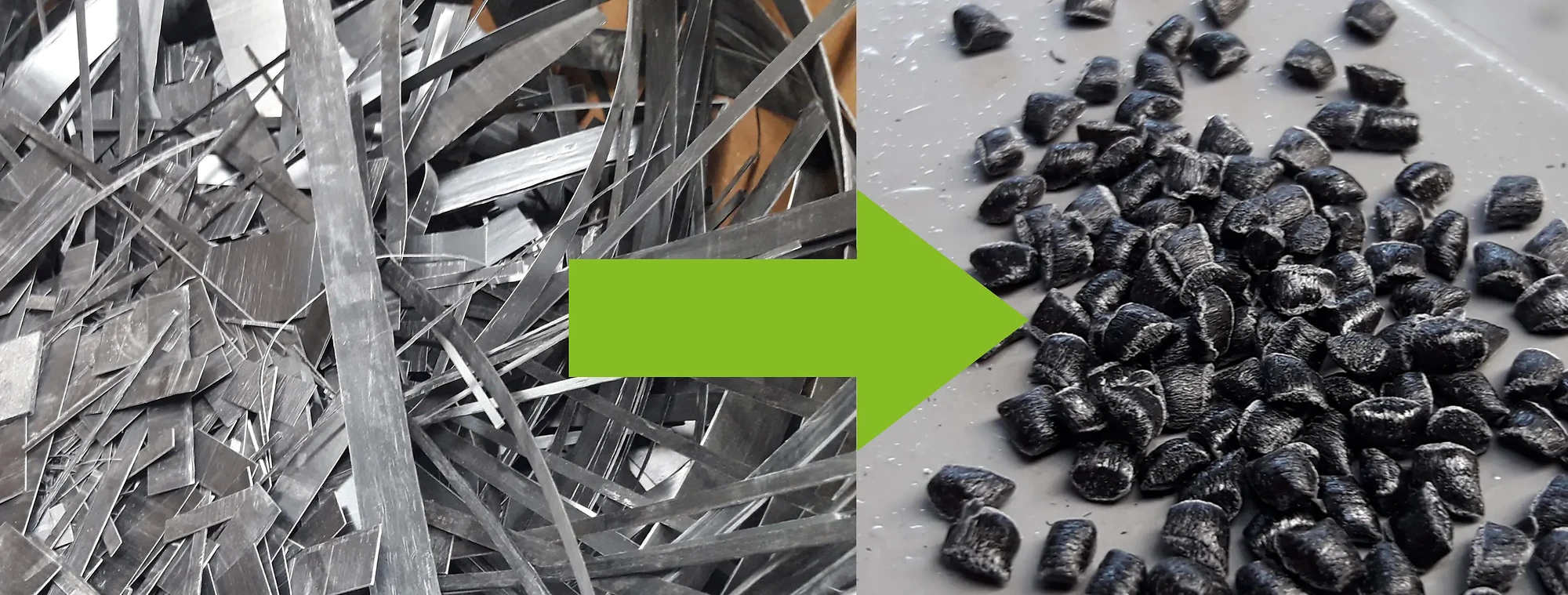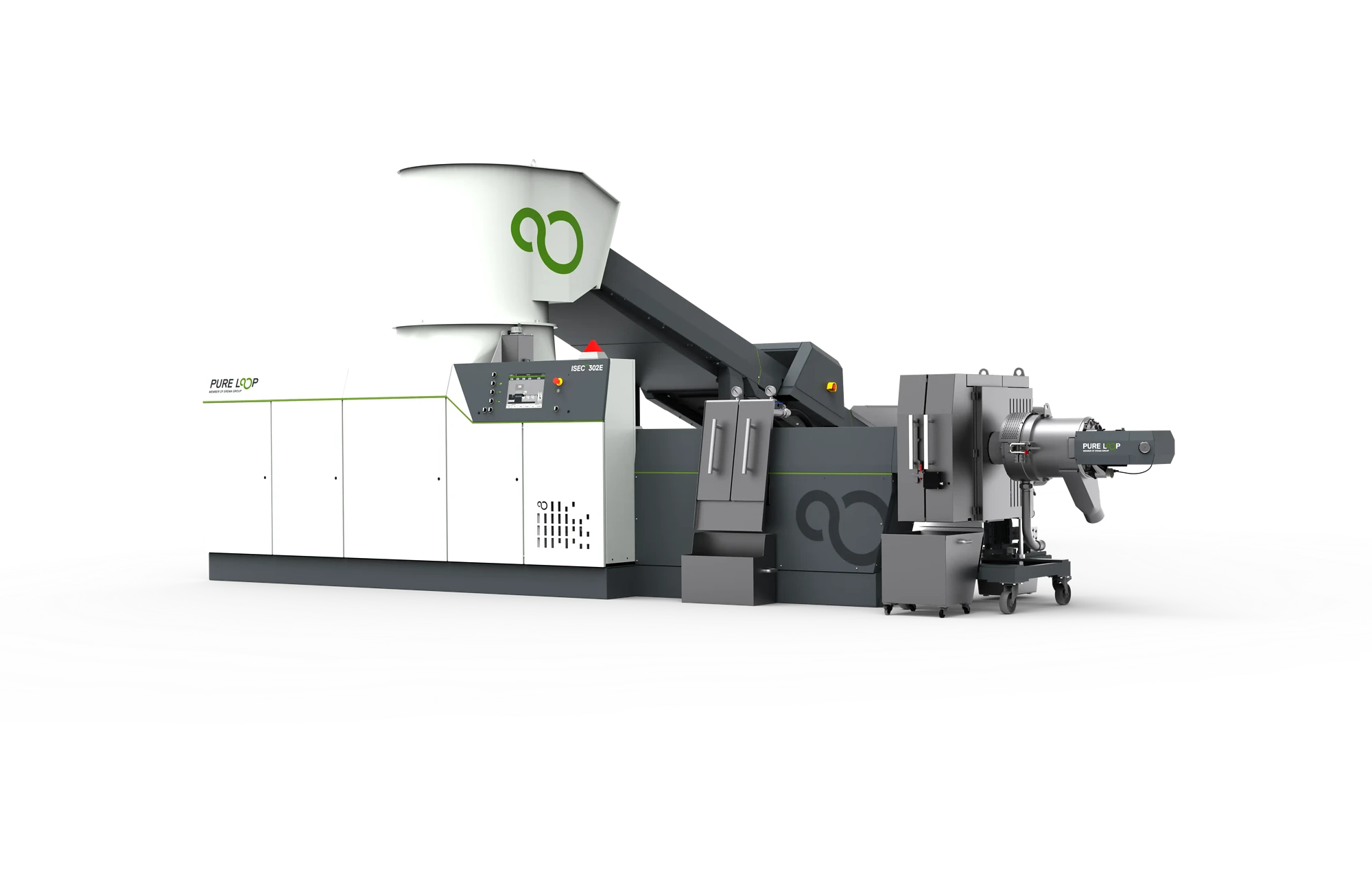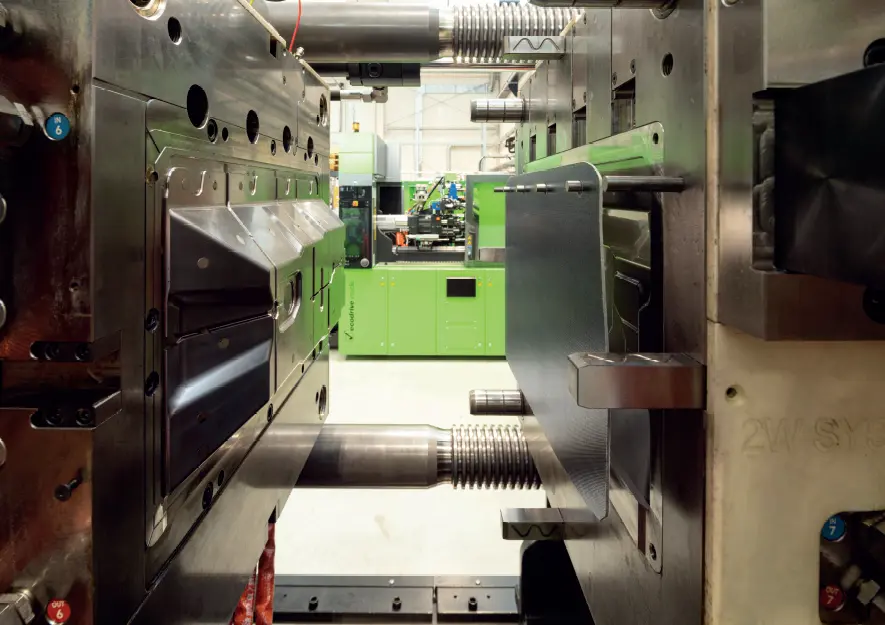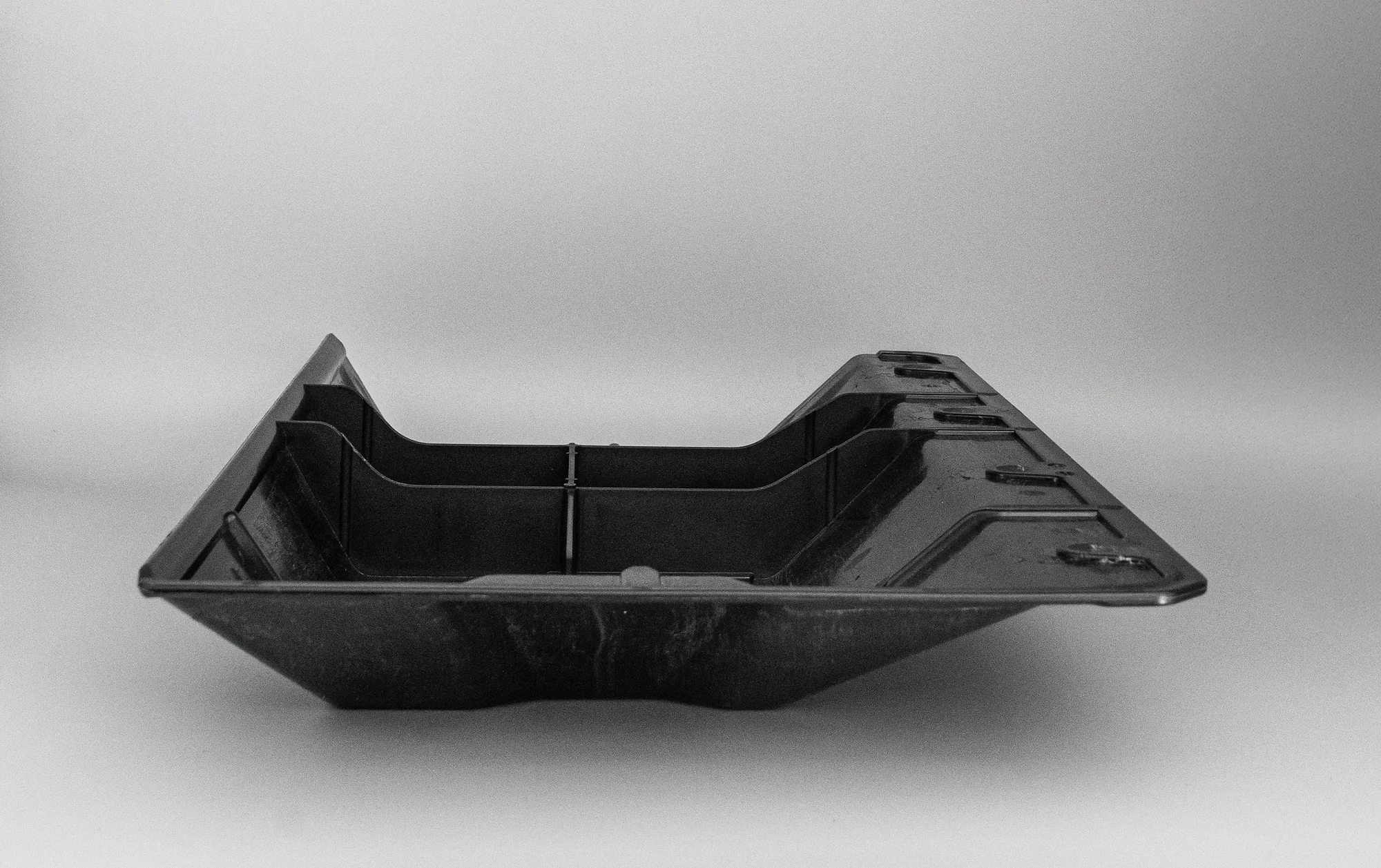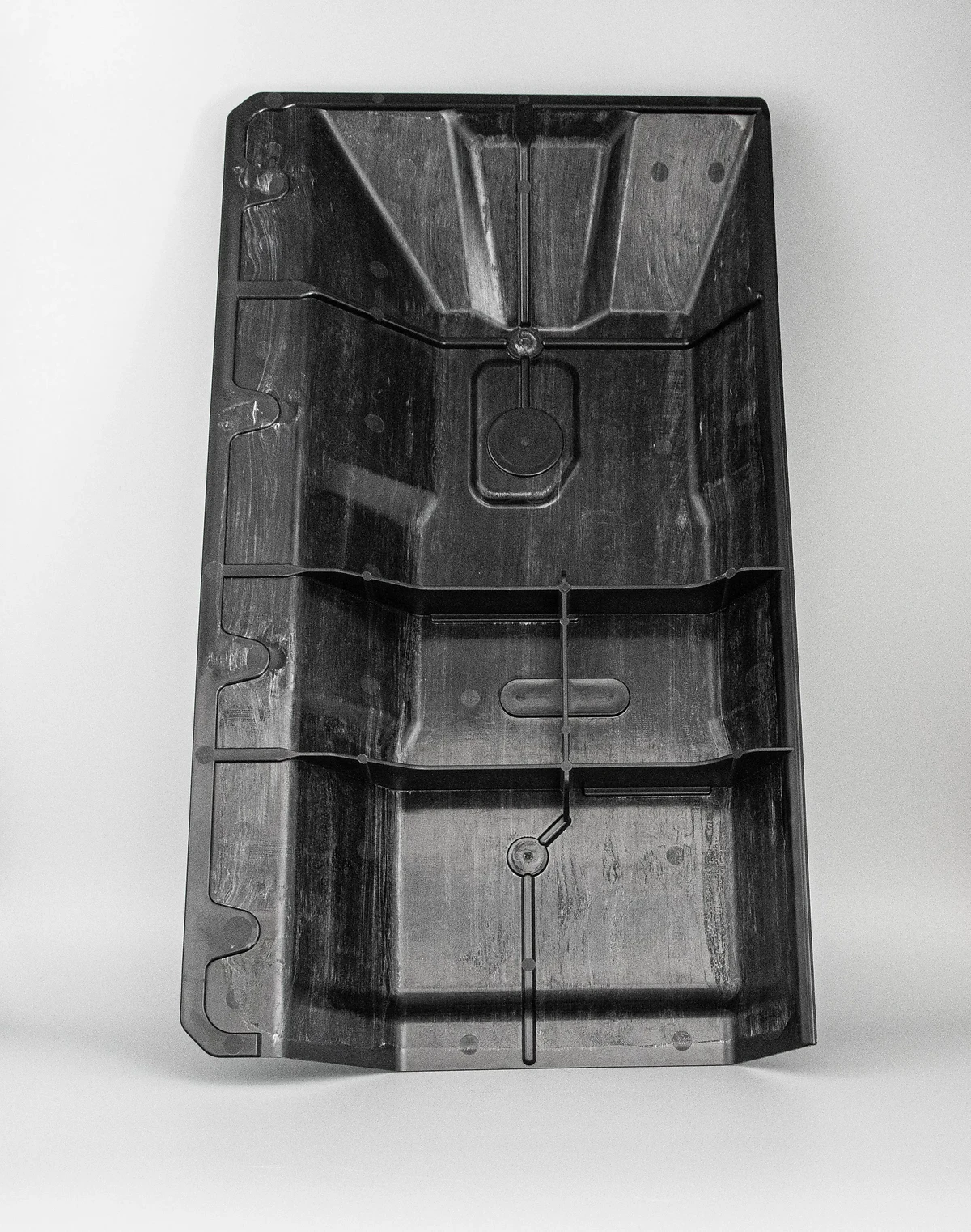
From production waste to high-quality injection-moulded part: What comes out of the ENGEL injection moulding machine is far more than a demonstration piece. The part produced symbolises a major advancement in automotive lightweight construction – made possible by the interplay of two technologies: Using the ISEC evo shredder-extruder recycling machine from PURE LOOP, part of the EREMA Group, fibre-reinforced thermoplastic offcuts are reprocessed into high-quality regranulate, which is then turned back into a functional component on the ENGEL injection moulding machine. This clearly shows how production waste can be transformed into functional parts – keeping the material firmly in the loop.
Thermoplastic composites have become indispensable in modern vehicle designs. They enable lightweight construction, design freedom, and efficient series production. However, one key challenge remains: managing production waste such as organosheet trim scrap. This is where PURE LOOP comes in: In close collaboration with ENGEL, it has been demonstrated that these trim scraps can be reprocessed into high-quality regranulate – and subsequently moulded into functional injection parts. In the process shown, the tape-based organosheet acts as a structural carrier, which is overmoulded during the injection moulding process with recycled material made from its own production offcuts. This allows complex functions and detailed geometries to be integrated directly. The result is a component that impresses both visually and in quality, taking the circular economy concept to its logical conclusion.
PURE LOOP as a key to the circular economy
The crucial step lies in reprocessing. The ISEC evo recycling machine makes it possible to process fibre-reinforced thermoplastics from production waste in such a way that their material properties are preserved. The outcome is a regranulate that can be used in the injection moulding process almost like virgin material.
The major advantage: In the future, components can be manufactured entirely from a single fibre-reinforced thermoplastic. This not only simplifies processing but, above all, facilitates later recycling – a clear benefit for circular vehicle concepts.
Injection-moulded component with series-production potential
The injection-moulded part produced clearly demonstrates the point: it’s not about lab-scale material tests, but practical, series-ready solutions. The part quality, process efficiency, and reproducibility prove that regranulate made from organosheet trim is a genuine alternative to virgin material. For the automotive industry in particular, this opens up new opportunities – from reducing material costs to sustainable resource use throughout the entire value chain.
Sustainable and economical at the same time
Recycling production waste not only contributes to CO₂ reduction but also directly boosts cost-efficiency. Valuable materials remain in the process, disposal costs decrease, and high-grade materials are used multiple times.
More information about this project and detailed text here.